
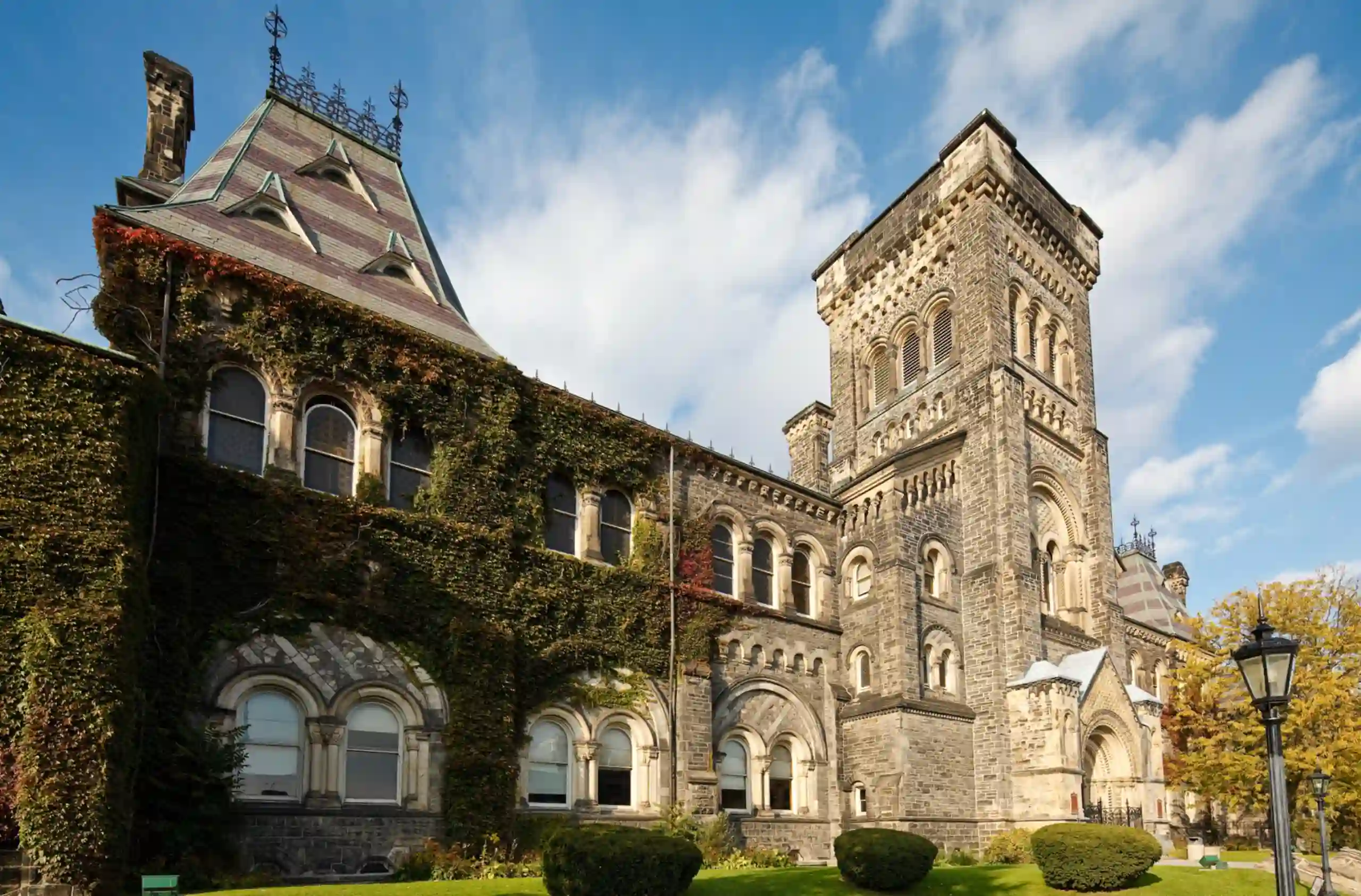
University of Toronto (U of T) is one of Canada's most competitive universities, with most undergraduate programs requiring a final average in the mid- to high 80s and select programs requiring supplemental applications. TutorLyft connects students across Canada with tutors who can help them meet those targets.
Whether you're a student mapping out your own application or a parent helping your child navigate the process, this guide is designed to make U of T's requirements clear and manageable.
Table: Comparison of Admission Requirements by Undergraduate Program (St. George campus)
For fall 2027 admission, U of T lists the following approximate grade requirements, based on the previous year’s admission averages.
Notes: All programs require English (or native language equivalent) in senior year. “Grade Range” indicates the typical average of admitted students (“mid-80s” = ~85%, “high-80s” = ~88-89%, etc.). Meeting the minimum does not guarantee admission if the program is competitive. Also, some programs (like Co-op management at UTSC or Computer Science progression after first year) have additional progression requirements once you are enrolled, but the table above covers admission to first year.
1. Undergraduate admission requirements
1.1 General admission requirements (domestic & international)
Domestic (Canadian) applicants
All applicants must have a high school diploma with strong academic results in Grade 12 courses. For Ontario high school students, this means completing the Ontario Secondary School Diploma (OSSD) with six Grade 12 U or M courses, including Grade 12 English (ENG4U) and all required prerequisite courses for your program. Students in other Canadian provinces or territories need the equivalent senior high school diploma and courses (e.g. Alberta Diploma with five 30-level courses, BC applicants need a High School Diploma with six Grade 12 academic subjects, including English, etc.) that fulfill U of T’s subject prerequisites. For fall 2027 admission, many programs list approximate admission ranges in the mid- to high 80s, though the exact range varies by faculty (see table below). Repeating courses is allowed, but U of T may give preference to students who achieved required marks on the first attempt.
International applicants
U of T welcomes students from curricula worldwide, but you must have credentials equivalent to the Canadian Grade 12 diploma. This typically means having completed your country’s university preparatory program (e.g. A Levels, IB Diploma, Indian SSC + HSC, US high school diploma) with high standing in required subjects. For example, U.S. students should present a strong GPA in academic courses; AP or IB classes are recommended. Standardized tests (SAT/ACT) are not mandatory – U of T does not require SAT/ACT scores for admission, though you may submit them if you feel they strengthen your application. All international applicants must demonstrate English language proficiency unless they have completed four or more years of full-time study in a recognized Canadian school or an English-language school in a country where English is the dominant language. U of T accepts tests like TOEFL and IELTS. For tests taken on or after January 21, 2026, the TOEFL iBT minimum is an overall score of 4.5, with 4.5 in Writing and 4.0 in Speaking, and IELTS Academic requires an overall band of 6.5, with no band below 6.0. You are required to take a senior-level English course in high school as well, and that mark will be considered in admissions.
International curricula have specific requirements – for example, U of T’s current published minimum for IB students is the complete IB Diploma with English HL or SL. For British-patterned applicants, the published minimum is five different IGCSE/GCSE/Ordinary Level academic subjects and three different A Level/International A Level academic subjects; U of T does not publish BBB as a general minimum. U of T provides detailed country-by-country requirements on its admissions site, so be sure to check the exact criteria for your educational system.
1.2 Program-specific requirements & selection criteria
In addition to the general requirements, admission standards differ by faculty and program. U of T’s undergraduate faculties (Arts & Science, Applied Science & Engineering, Business/Management, Architecture, Kinesiology, Music, etc.) each set specific prerequisite courses and competitive grade ranges. Generally, strong marks in relevant senior courses are critical, as many programs admit students with mid-80s or above. More competitive programs may demand averages in the 90s.
Arts & Science (St. George campus)
This includes programs in Life Sciences, Physical & Mathematical Sciences, Social Sciences, and Humanities. All applicants to Arts & Science need Grade 12 English (ENG4U) and typically Advanced Functions (MHF4U) or Calculus (MCV4U) for science-based programs. For Life Sciences, Calculus (MCV4U) is required and at least one Grade 12 science (Biology, Chemistry, or Physics) is highly recommended. For Social Sciences or Humanities, Calculus is not required except if you intend to study Economics (which does require MCV4U) or certain programs like Commerce (see Rotman Commerce below). Admission to general Arts & Science programs is competitive. Within Arts & Science, admission is to broad program categories (e.g. “Life Sciences”) – after first year, students choose specific majors. There is no supplemental essay required for general Arts & Science admission; admission is based primarily on your academic average in the top six Grade 12 courses (or equivalent) including prerequisites.
Rotman Commerce (Bachelor of Commerce)
U of T’s prestigious business undergraduate program (Rotman Commerce) is part of the Faculty of Arts & Science but has a separate entry category. Admission requires Grade 12 English (ENG4U) and Calculus (MCV4U) A high level of achievement in math and English is important – “particular attention is paid to English and Calculus” for commerce applicants. Admission is competitive. In addition to marks, Rotman Commerce requires a Supplemental Application. This typically involves short written responses and a video interview component (hosted online) to assess your communication skills, leadership experience, and fit for the program. You must complete the Rotman Commerce essay/video by the stated deadline after applying. Both strong academics and a well-crafted supplemental application (demonstrating interest in business, leadership, and well-rounded activities) are needed to gain entry to Rotman Commerce.
Faculty of Applied Science & Engineering
U of T Engineering is highly competitive, with applicants across Canada and abroad. Prerequisites include Grade 12 English (ENG4U), Calculus (MCV4U), Advanced Functions (MHF4U), Chemistry (SCH4U), and Physics (SPH4U) (or equivalents in other curricula). In other words, a strong background in math and science is mandatory. Admission is competitive across all engineering programs, and Engineering Science is especially selective. Aside from marks, Engineering uses a mandatory Online Student Profile – a supplemental application where you write short answers and complete an online video interview. The profile lets you highlight your extracurricular activities, leadership, design or coding experience, and motivations for engineering. U of T Engineering explicitly states that if you have slightly lower marks but strong extracurricular involvement, you are still encouraged to apply – the supplemental profile is an opportunity to bolster your application. All engineering applicants are evaluated on a combination of academics and the personal profile. Therefore, competitive applicants need excellent marks in all prerequisite courses and a compelling personal profile.
Computer science (St. George campus)
Computer Science at U of T is an admission category within the Faculty of Arts & Science, and it has become very competitive in recent years. The prerequisites are ENG4U and Calculus (MCV4U). Admission is very competitive, reflecting the strong demand for the program. Notably, starting with the 2023-24 admissions cycle, Computer Science applicants must submit a supplemental application (after applying through OUAC). This is a new requirement designed to assess skills and interest in computer science beyond grades. The supplemental application may include short essay questions about your programming experience, problem-solving approach, or interest in the field. Be sure to complete this supplemental form by the deadline indicated in your U of T applicant portal. Admission to comp sci is based on both your academic average and the supplemental responses.
Architectural studies (John H. Daniels Faculty)
Applicants to the Architecture program must have Grade 12 English (ENG4U). There are no math or physics prerequisites explicitly required for the Architectural Studies BA, but having some background in art or calculus can be useful. Admission is competitive. Architectural Studies applicants complete the current Daniels supplementary exercise by making an object from household materials, submitting three photographs and writing a summary of no more than 200 words. No additional portfolio is accepted. The combination of strong marks (especially in English and art/design courses) plus a compelling submission will determine admission.
Kinesiology & physical education
The BKin program requires ENG4U, one Grade 12 science (Biology, Chemistry, or Physics), and one Grade 12 math (either MHF4U or MCV4U). An exercise science or physical education course (e.g. PSK4U) is recommended but not required. Kinesiology also asks applicants to complete a Statement of Interest – essentially a short essay describing your interest in kinesiology, your related experiences (sports, coaching, volunteer work), and career goals. This helps the faculty assess passion for the field. Ensure your statement is well-written and submitted by the deadline.
Music (Faculty of Music)
For Music programs (such as performance, music education, etc.), the academic requirements are a bit lower, but you still need ENG4U and competitive marks. The crucial part of Music admission is demonstrating musical talent. All Music applicants must submit a Music Questionnaire and perform an Audition. After applying, you’ll be contacted to provide your background in music (instruments, theory, experience) and to schedule an audition (either live or via recording). For certain streams like Jazz, a pre-screening video is required first. Essentially, Music faculty admission is talent-based: you must meet the academic threshold and then excel in the audition process to be offered admission.
U of T Mississauga (UTM) and U of T Scarborough (UTSC)
U of T’s other two campuses have their own programs and admission categories (separate codes on the application). They generally have similar course requirements. For example, Life Sciences or Management at UTM/UTSC will require the same Grade 12 courses as downtown campus. However, the admission averages for UTM/UTSC programs are generally a little lower than St. George campus for comparable programs, though the exact gap varies by program and year. Both UTM and UTSC also offer co-op programs (especially UTSC) which may have additional application steps (like interviews for Co-op after first year). As an applicant, you can apply to multiple campuses to maximize your chances. The table below focuses on St. George programs, but note that UTM/UTSC, which welcomed over 8,200 new first-year students in 2025-26, are excellent alternatives. Check each campus’s program page on the U of T admissions site for current ranges.
1.3 Other considerations (IB, AP, college/transfer)
If you’re in an IB (International Baccalaureate) program, U of T will consider your IB points. Generally, a score in the low-to-mid 30s was the minimum for consideration in past admissions cycles, but competitive programs typically looked for 37 or higher. U of T’s current published minimum is the complete IB Diploma with English HL or SL, so check the official requirements for current program-specific expectations. Prerequisite subjects should be taken at Higher Level when possible. Eligible faculties may grant transfer credit for a maximum of three Higher Level IB courses with grades of 5 or higher, though Engineering does not award this credit. AP (Advanced Placement) courses are also recognized – eligible faculties may award AP transfer credit for exam scores of at least 4.
College or University Transfer applicants (those who have completed some post-secondary study) have separate requirements. Typically, a strong academic record in current studies is needed to transfer, and space is limited in upper years. Some undergraduate programs (like Nursing, Social Work) require prior university study – check the “Programs Requiring Prior University Study” section on U of T’s website if applicable.
Finally, U of T has an optional Student Profile Form (SPF) for applicants who feel their academics don’t fully reflect their potential due to extenuating circumstances (illness, personal issues, etc.). If your marks were negatively impacted by significant challenges, you can submit an explanation and documentation. U of T may take this into account during admissions. This is one way students on the lower end of the average range might still be considered – by providing context for their performance.
2. Application process & deadlines

Applying to the University of Toronto involves several steps. Below is a step-by-step guide for the undergraduate application process, followed by key deadlines for domestic and international applicants.
Step 1: Research your program choices
Before applying, thoroughly research U of T’s programs and campuses. Decide which campus (St. George, Mississauga, Scarborough) and which programs you are interested in. You can apply to up to three U of T program areas or campuses in one application cycle, but only once per program area – for example, you cannot apply to both Rotman Commerce and Life Sciences within the Faculty of Arts & Science at St. George in the same cycle. Ensure you meet the prerequisites for each program (see Section 1) and note any supplemental application requirements.
Step 2: Prepare required documents
All applicants should have access to their transcripts showing marks to date. Ontario high school students will have marks submitted automatically through their school. Out-of-province and international students should be ready to upload or mail official transcripts of their most recent grades (and predicted scores, if applicable). If you have taken standardized tests (SAT, ACT, etc.) or English proficiency exams (TOEFL, IELTS), have those scores ready to send, although again SAT/ACT are optional. You will also need to have documents like proof of status in Canada (if applying as a permanent resident) and any required reference letters or portfolios for certain programs (most undergrad programs do not require reference letters, except Education or Nursing which are post-undergrad). Make a note of supplemental application instructions for programs like Engineering, Rotman Commerce, Architecture, Music, etc., so you can prepare those materials or responses.
Step 3: Submit an application via OUAC
All undergraduate applications to U of T are submitted through the Ontario Universities' Application Centre (OUAC). Applicants use the OUAC Undergraduate application for 2027 admission, with U of T directing applicants to the appropriate application route where exceptions apply. Go to the OUAC website and create an account. On the application, select “University of Toronto” and then choose your program(s) and campus(es). Each program choice has a code (e.g., TLA for Architectural Studies, TAC for Rotman Commerce) – ensure you pick the correct one and campus. Fill in all personal information, academic history, and program choices. You’ll pay the OUAC base application fee of CAD $159 for the initial three program choices for 2027 admission, and the OUAC lists a $98 CAD University of Toronto document-evaluation fee for Group B applicants for 2027 admission. After submitting, U of T will email you login details for the Join U of T applicant portal about a week after U of T receives the application.
Step 4: Submit supplementary documents on Join U of T portal
Once U of T has received your OUAC application, you must log into the Join U of T portal (U of T’s applicant system) to upload required documents and see a checklist of items. Ontario high school students’ marks are forwarded via OUAC, but all other applicants typically must upload transcripts (scans of your report cards or official transcripts) via the portal. International students: if your documents are not in English, provide certified translations. If English proficiency proof is required, arrange for your test scores to be sent electronically (TOEFL institution code 0982-00) or upload your IELTS TRF number. The portal will show specific “to-do” items for you, which may include: Transcript, English test, Supplemental Application, etc. Complete each required item by the deadline given. For example, after applying, Rotman Commerce applicants will find a link in the portal to the Rotman Supplemental Application (hosted on a system called Kira Talent) – you’ll need to complete the video interview and written questions by the deadline. Engineering applicants will be emailed instructions to access the Engineering Applicant Portal to do the Online Student Profile. Check your email and portal regularly for these instructions.
Step 5: Application deadlines
Be mindful of deadlines. The key dates for fall 2027 admission are summarized below.
Step 6: Accepting an offer and next steps
If you receive an offer, congratulations! You’ll need to accept the offer through OUAC by the deadline. U of T requires you to maintain your marks – offers are conditional on your final results. The conditions (e.g., “finish diploma and keep average above X%”) will be stated in the offer letter. After accepting, follow instructions to register for courses, college selection (for Arts & Sci), residence applications, etc.
Important: Throughout this process, check your email and applicant portal frequently. U of T will communicate any missing documents or additional steps (for example, they might request updated marks or an English test). Missing a deadline or required document can jeopardize your application. If you have questions, you can always contact U of T Admissions directly – they have support for both domestic and international applicants.
2.1 Summary of key deadlines (undergraduate fall admission)
Deferral/Other Entry: U of T mainly admits for the Fall (September) term. A very limited number of programs may allow January entry, but it’s uncommon for undergrad. If needed, you can request to defer an offer for a year, but this is granted case-by-case.
Always confirm these dates on U of T’s “Important Application Dates” page for the year you apply, as they can shift slightly.
3. Tips for strengthening your application
Admission to U of T is competitive, especially for high-demand programs, and Ontario universities received a record 805,956 applications for fall 2026. Beyond meeting the minimum requirements, you should aim to exceed them and present a well-rounded, compelling profile. Here are some tips to maximize your chances:
3.1 Personal profile & essay tips
Many U of T undergrad programs do not require a general essay, but for those that do (e.g. Rotman Commerce, Engineering, Kinesiology, Architecture, etc.), writing a strong admissions essay is crucial. Treat the supplemental application or “personal profile” as your chance to speak beyond your grades. Keep these tips in mind:
Be genuine and specific
Whether it’s an essay about why you chose engineering or a video interview question like “describe a challenge you overcame,” be honest and reflect your experiences. Use specific examples from your life (school projects, community involvement, personal passions) to illustrate qualities like leadership, creativity, resilience, and teamwork. Authenticity stands out more than telling them what you think they want to hear.
Highlight fit and enthusiasm
Convey why U of T and why that program. For example, a Rotman Commerce essay can mention your excitement for its internship opportunities or the campus clubs you’d join, while an Engineering profile answer might reference a particular engineering discipline or design project at U of T that inspires you. Showing that you’ve researched the program demonstrates interest.
Structure and clarity
Even short-answer prompts should have a clear structure. Write in a concise, organized way with proper sentences (avoid slang, use a semi-formal tone). Have an intro (or direct answer to the question), a body with supporting details, and a brief conclusion or takeaway. Given word or time limits, make every word count.
Revise and practise
Draft your responses in advance (when possible) and proofread carefully for grammar and spelling. If you have a video interview (like for Rotman or Engineering), practise speaking on camera. You can simulate the experience by recording yourself answering common questions (“Tell me about yourself,” “Why this program?”, etc.) within a time limit. This will help you appear confident and clear during the real video response. On the actual supplemental application, technical glitches can happen, so do a trial run if the system allows, and remain calm if you need to re-record.
Showcase your strengths
Use the profile to highlight things that aren’t obvious from grades alone. For instance, mention significant achievements (won a science fair, led a fundraiser, overcame a hardship, fluent in multiple languages, etc.). If the form allows you to upload a résumé or list activities, choose those that show leadership, dedication, and impact.
3.2 Extracurriculars and leadership
U of T primarily evaluates academics, but having strong extracurricular involvement can set you apart, especially for supplemental applications and if you need to explain a weaker semester. Quality is better than quantity:
Depth of involvement
It’s more impressive to see a student who committed 2+ years to an activity and took on responsibilities, than someone who joined 10 clubs for brief periods. For example, being the president of the student council or captain of a sports team, or organizing a major school event, demonstrates leadership and time management.
Relevance (optional)
You do not need activities related to your program for admission, but if you do have them, highlight them. An aspiring Computer Science student might mention coding competitions or an app they developed. A prospective Medicine student could note volunteering at a hospital. However, even unrelated activities (like playing an instrument, part-time jobs, caring for family, etc.) are valuable as they show various skills and character traits.
Achievements and awards
If you have any distinctions – academic awards, art/music accomplishments, athletic titles, Duke of Edinburgh award, etc. – include them in your profile or mention them in essays if relevant. They can reinforce that you excel and persevere in your pursuits.\
Community service
U of T appreciates socially engaged students. Volunteer work (community service hours, charity drives, mentorship roles) can signal a well-rounded character. Mention any long-term volunteer commitments or unique service experiences you had and what you learned from them.
3.3 Academic preparation & grade improvement
Since marks are the most important factor, students on the lower end of the average range should take steps to raise their grades before applying:
Boost key course marks
Identify which prerequisite or Grade 12 courses are dragging down your average and see if you can improve them. This might mean retaking a course (in night school or summer school) if feasible. U of T will see repeated courses, but if you significantly improve a mark, it can help (just note they “reserve the right” to prefer first attempts– occasional repeats are fine, but don’t retake many courses). An alternatively strategy is taking an additional academic course to add to your top-six that you excel in (for example, an extra 4U course in a subject you’re confident in, to boost the average).
Show an upward trend
If your Grade 11 year or an earlier term was weak due to circumstances, focus on getting much stronger marks in your final term. U of T looks at final 12U/M grades – a strong finish can sometimes compensate for a slow start. If needed, use the Extenuating Circumstances form to explain any one-time drops in performance (such as illness or family issues that affected a semester).
AP/IB exams
If you’re in a position to take AP exams (even self-study) and score highly, it can indirectly strengthen your profile. While U of T doesn’t typically use AP exam scores for admission decisions, a score of 5 on Calculus or Physics, for example, could be mentioned in a supplemental application to show mastery. Similarly, completing the full IB Diploma with a rigorous subject combo shows academic rigor.
Preparation for required tests
International students needing an English test or applicants to Medicine/Law (who need MCAT/LSAT – covered in the grad section) should study well in advance for these exams. A high score can sometimes balance a slightly lower school mark (for undergrad, TOEFL/IELTS just need to meet the minimum, there’s no bonus for higher, but ensure you comfortably meet the cutoff so it’s not a concern).
3.4 Additional strategies for applicants with a lower average
If your average is a bit below the typical cut-off for your dream program, there are still pathways into university. Consider these approaches to improve your chances:
Apply to multiple campuses
As noted, U of T St. George is the most competitive. U of T Mississauga and Scarborough offer similar programs (e.g., Life Sciences, Computer Science, Business) with slightly more modest admission averages. Once in, you’ll get a U of T degree regardless of campus. You can later try to internally transfer to St. George after first year if you excel (though this is competitive and not guaranteed).
Alternate pathways
U of T is competitive, so also apply to a few “safety” schools (other universities or colleges). Some students choose to do a year at another university and then reapply to U of T as transfer students after first year with a strong university average. If you go this route, aim for a strong first-year average to be considered for transfer. Another pathway is starting in a less competitive program and switching majors later. For example, getting into a BA program in Humanities (which might have a slightly lower cutoff) and then attempting to switch into Computer Science second year (note: for CS at U of T, all first-year students must compete for limited second-year spots via grades, so this is a risky route – but for programs like switching from one science to another, it can work if you meet requirements).
Use extenuating circumstances (if applicable)
As mentioned, if you genuinely faced hardships that pulled your grades down (serious illness, family tragedy, etc.), fill out the U of T extenuating circumstances form on OUAC's site. Provide a concise explanation and maybe a letter from a counselor or teacher confirming the situation. U of T may show leeway in “below cut-off” cases where a strong student had a brief setback.
Strong final exams
In some cases, offers can be given or reconsidered after final exams. If you just barely missed the initial cut, a stellar set of final Grade 12 exam results (where applicable, like Ontario final marks or IB final exams) could tip you into the admit range. It can be tempting to ease off in the final stretch of Grade 12, but those last marks genuinely matter. A strong finish can be the deciding factor if you're close to the cut-off.
Interview (if offered)
While most undergrad programs (aside from supplemental video essays) don’t do interviews, if you are contacted for any follow-up (for example, Music auditions, or U of T Scarborough’s Co-op management sometimes has an interview process), treat it very seriously. It means you’re on the bubble and they want more info. Present yourself professionally, be enthusiastic about the program, and be ready to discuss anything on your application.
To pull it all together: grades are the foundation, so keep them as strong as you can. But the essays, profiles, and supplemental forms are your chance to show who you are beyond your transcript, and they’re worth taking seriously. When grades are similar across many applicants, a thoughtful supplemental application or a meaningful achievement can be what tips the decision in your favour.
Lastly, apply early and carefully. Submitting your application well before the deadline can sometimes lead to an early review. Double-check that you’ve included all required info. Little things (like ensuring your name on documents matches, or that you answered all application questions) can prevent delays or issues. With solid preparation, you can put forward an application that truly represents your strengths and potential.
Conclusion
Admission to U of T involves a lot of moving parts, and it's normal to feel unsure about where your application stands. Most students don't have a perfect profile – the goal is to show your genuine strengths clearly, meet the prerequisites for your chosen program, and give yourself enough time to do the supplemental steps properly.
If you'd like help improving your marks in prerequisite courses before you apply, TutorLyft can match you with a qualified tutor in your subject area.

















































































FAQs
Most U of T undergraduate programs list approximate admission averages in the mid- to high 80s, while Computer Science and Engineering Science reach the low to mid 90s. Admission also requires Grade 12 English (ENG4U) and the prerequisite courses for the chosen program.
Transfer applicants present a strong academic record from their current post-secondary studies, and space in upper years is limited. Some programs, such as Nursing and Social Work, require prior university study, and U of T lists these on its "Programs Requiring Prior University Study" page.
Yes, U of T ranks among Canada's most competitive universities, and meeting the minimum average does not guarantee admission in high-demand programs. Programs like Engineering, Rotman Commerce, and Computer Science also add supplemental applications that assess skills, experience, and fit beyond grades.
No, Life Sciences and Social Sciences and Humanities admit students by marks only. Rotman Commerce, Engineering, Computer Science, Architectural Studies, Kinesiology, and Music each require a supplemental component such as an essay, video interview, or audition.